No-Latency Time-Series Queries: Why Operators Can't Inspect Cached Data
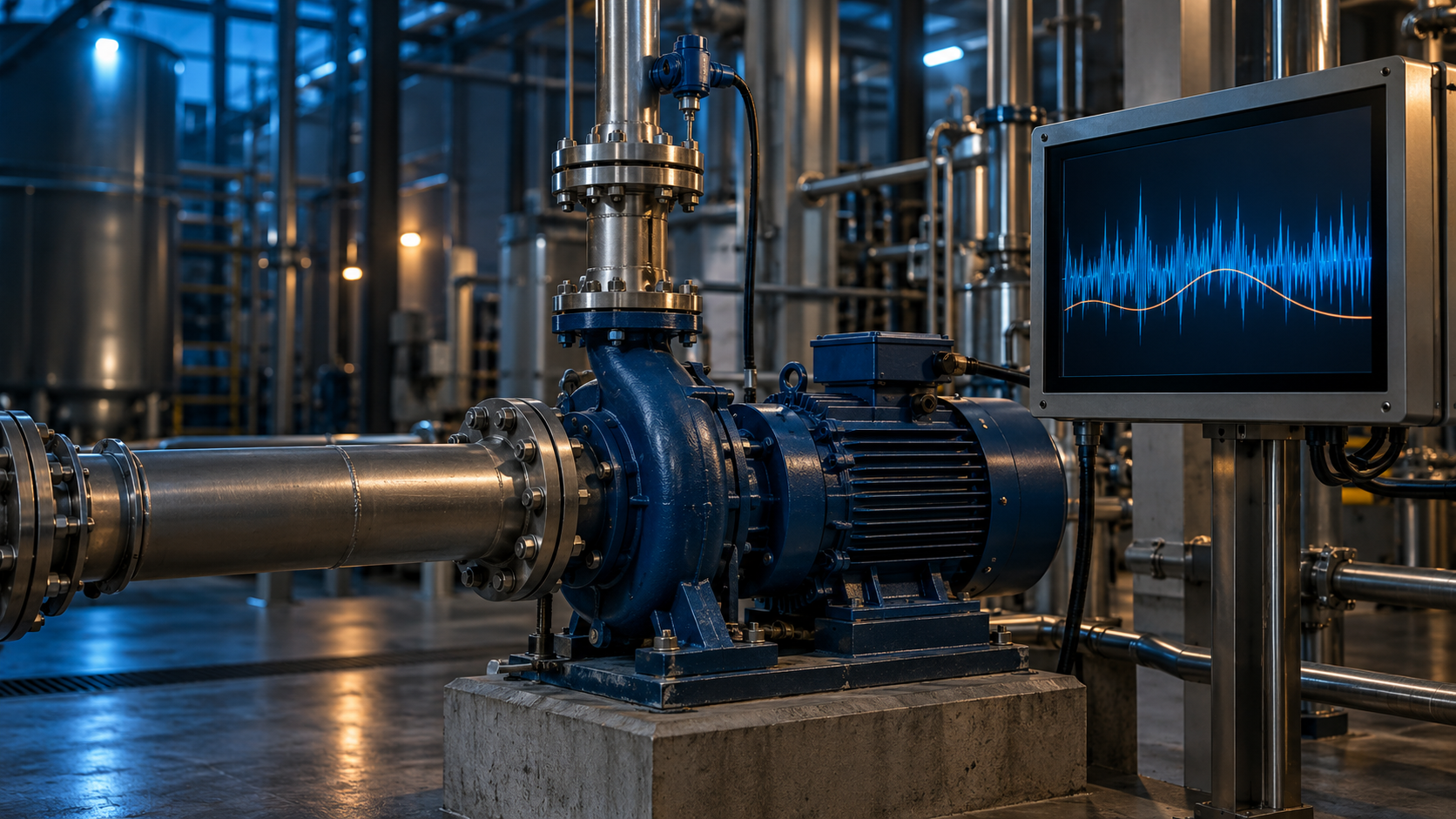
"The dashboard says everything's fine. The machine says otherwise." Operators can't run advanced inspections on data that's already been averaged, sampled, or cached before it reaches them. They need raw, low-latency time-series querying built into the loop they already run.
"By the Time I See It on the Dashboard, It's Already Smoothed Over"
That's what a shop floor operator told us, standing in front of a screen showing a clean, five-minute-averaged trend line for a pump that had already tripped twice that shift.
The dashboard wasn't wrong. It just wasn't raw. Somewhere between the sensor and the screen, someone decided what resolution the operator was allowed to see, and how long they'd wait to see it.
That decision, made in a batch job, a rollup table, or a pre-aggregation layer, is where most advanced inspections quietly die before they start.
Two Ways to Get Data in Front of an Operator
There are really only two architectural paths for getting time-series data to a person standing at a machine.
Path one: aggregate first, query later. Raw points get summarized into rollups, averages, or downsampled views at ingest time. The dashboard is fast because the hard work already happened, upstream, before anyone asked a question. This is efficient for a chart. It's a dead end for an inspection, because the resolution needed to catch a transient spike, a short oscillation, or a five-second anomaly was already discarded.
Path two: compute-down. Raw data stays raw. The math, the correlation, the filter, the comparison against last Tuesday, runs at query time, against the full-resolution history, and the answer comes back in seconds. Nothing gets thrown away before the operator asks the question, because nobody knew the question in advance.
Spocky is built on the second path. We've written about this trade-off in more detail in our compute-down vs. ingest-first framework, but the short version is: aggregation is a bet on which questions matter. Operators ask the questions nobody bet on.
Why Aggregation Breaks Advanced Inspection Specifically
Monitoring and inspection are not the same job, and they don't have the same data requirements.
Monitoring asks: is this value inside a known range? A five-minute average is often good enough for that.
Inspection asks: why did this happen, has it happened before, and what changed? That requires the raw signal, full resolution, timestamped, queryable across weeks or years, because the cause is frequently hiding in the part of the signal a rollup erased. We cover this distinction at length in Monitoring Tells You What Happened. Here's What It Takes to Find Out Why.
An operator running an advanced inspection needs to:
- Pull the raw signal around the event, not the averaged one.
- Compare it against raw signals from similar events, weeks or months back.
- Cross-reference it with maintenance logs, work orders, and quality notes.
- Get an answer fast enough to act before the next run starts.
A cached, pre-aggregated dashboard can satisfy none of these four in sequence. Each one requires going back to raw data, and if raw data isn't queryable at low latency, each step becomes a ticket to the data team instead of a step in the operator's own loop.
The Cost of Sending Raw Data the Wrong Way
The obvious objection: if raw fidelity matters this much, why not just ship all the raw points to wherever the question gets answered?
Because the volume makes that approach collapse on its own. A single heat pump's raw time-series data over one week can be 5 to 30 times larger than the largest context window on the market today, and that's one asset, one week. Multiply that across a fleet and the idea of re-ingesting raw history into a model for every question isn't just slow, it's structurally impossible. We go deeper on this in Why Re-Ingesting Time-Series Data Into an LLM Fails at Industrial Scale.
Compute-down solves this differently. Instead of moving billions of points to the question, it sends the math to the data, reducing latency and token use by up to 90%. The operator still gets a raw-fidelity answer. The system just never has to move the whole haystack to find the needle.
What This Looks Like in the Operator's Loop
An operator doesn't want a new tool to check. They want the tool they already use to answer faster.
Here's the loop, as it runs with low-latency access to raw time-series data:
- Notice. A logic-check agent flags an anomaly the moment it appears in the raw stream, instead of it sitting buried until someone happens to scroll to that chart.
- Ask. The operator asks, in plain language, why the anomaly happened, no query language, no data team ticket.
- Answer. Spocky answers deterministically and explainably, in seconds, cross-referenced against maintenance logs and prior events, because it's querying raw history directly rather than a cached summary.
- Act. The operator, or the shop manager, makes the call. Spocky surfaces the evidence, a person signs off on the action.
- Document. The finding becomes part of the record, so the next investigation starts further ahead than this one did.
This is the same loop we describe in Why Your Pump Trip Investigation Takes 11 Days (and How to Cut It to Seconds), a question that used to take 11 days across three teams, answered in seconds, because nobody had to wait for someone to re-aggregate the data first.
Raw Fidelity Is the Whole Point
Aggregation isn't a bug. It's the right choice for an executive dashboard tracking uptime over a quarter. It's the wrong choice for an operator standing next to a machine that just did something unexpected.
The operator's question wasn't anticipated by whoever built the rollup. It can't be answered by a cache. It needs the raw signal, queried directly, at a latency low enough to fit inside the shift the operator is working.
That's the bar: not a faster dashboard, but raw data, queried on demand, fast enough to be part of the inspection instead of a report on it.
Metrics Recap
- Up to 90% cut in latency and token use by computing on raw data instead of moving it
- Answers in seconds instead of an 11-day, three-team email chain
- Deterministic, explainable results, no sampling, no approximation
- One two-person team supervising 400+ heat pumps on raw, full-resolution telemetry
Talk to Our Team
If your operators are inspecting cached charts instead of the raw signal, that's a data architecture problem, not a people problem.
Talk to our team to see how compute-down time-series querying fits into the loop your operators already run, or read more customer stories to see it in production.
FAQ
What's the difference between low-latency raw querying and a fast dashboard?
A fast dashboard is fast because the data was aggregated before the dashboard ever loaded, averages, rollups, or downsampled views computed ahead of time. Low-latency raw querying means the full-resolution data stays raw, and the computation happens at the moment the question is asked, against history that hasn't been summarized away.
Doesn't querying raw data at query time take longer than reading a cached dashboard?
Not with a compute-down architecture. Spocky sends the computation to the data instead of moving billions of raw points somewhere else first, which is what keeps answers deterministic, explainable, and delivered in seconds rather than minutes.
Why can't we just feed raw sensor data into an LLM for these inspections?
Volume. One heat pump's raw time-series data over a single week can be 5 to 30 times larger than the largest context window on the market. Re-ingesting that volume for every question burns tokens and doesn't scale across a fleet, the math needs to run against the data where it lives, not inside a model's context window.
Does this replace the operator's judgment?
No. Spocky surfaces the raw evidence and a deterministic answer, cross-referenced with logs and history. A person still makes the call and signs off before any action is taken on the fleet.
Is this only useful for real-time alerts?
No. Alerting tells you something happened right now. Advanced inspection is about investigating why, which requires querying raw history across days, weeks, or years, not just watching the current value against a threshold.