Why IoT and Predictive Maintenance Pilots Stall Before They Ever Reach Prediction
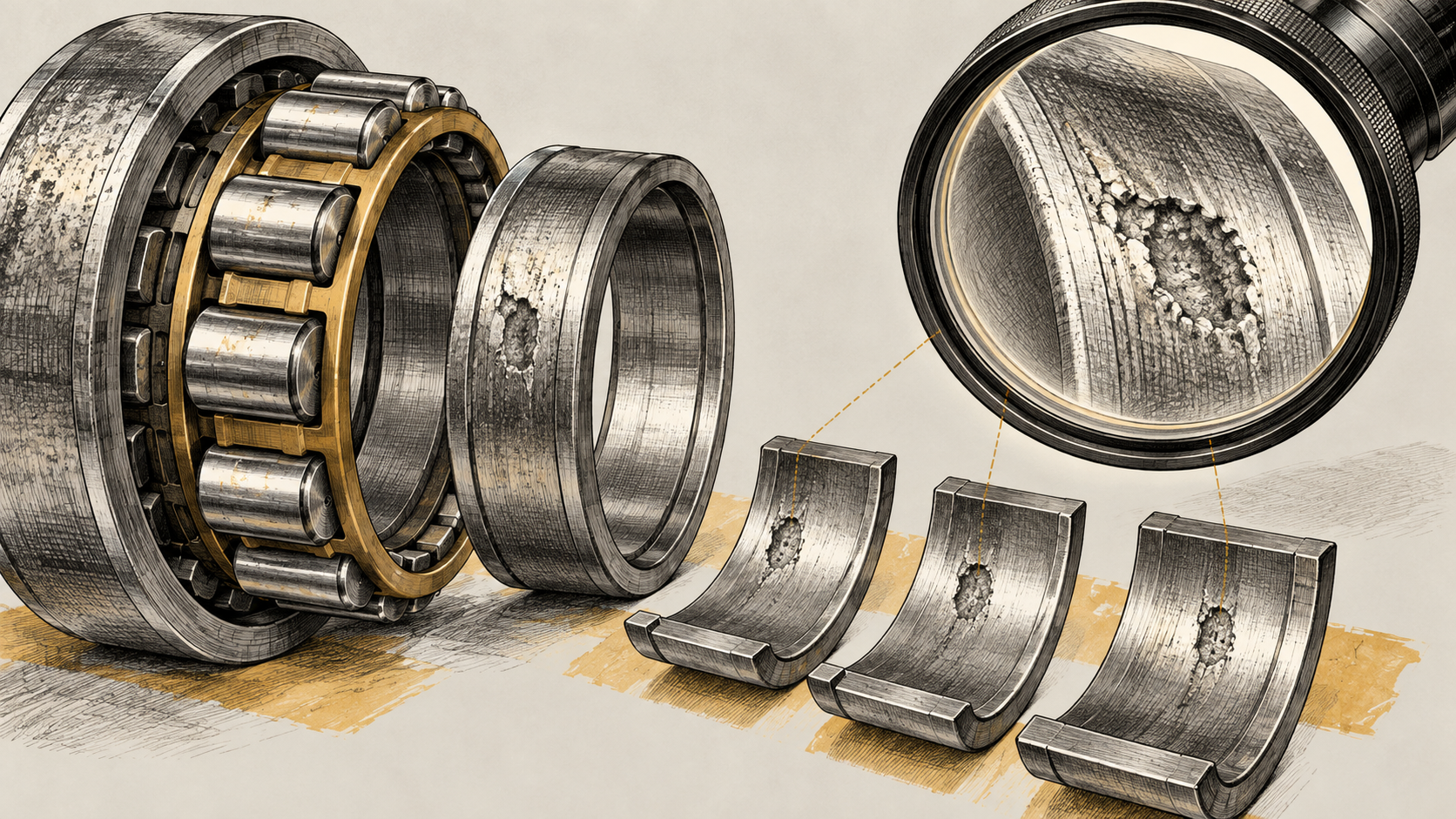
"Why did pump B7 trip last Tuesday?" turns into an 11-day email chain across three teams, and no sensor stack fixes that. IoT and predictive maintenance only work once someone can actually investigate the raw data first.
"Just tell me why the pump tripped."
That's the question a shift supervisor asked after pump B7 went down last Tuesday. Three teams, eleven days, and a long email chain later, someone finally had an answer.
By then, the line had already run two more shifts with the same unresolved risk.
This is the part most IoT and predictive maintenance pitches skip. They start with sensors and end with a model. But between those two points sits the actual work: finding out what's true in the data before you ask a machine to predict anything from it.
Spocky starts there, with the investigation, not the model.
IoT gives you data. It doesn't give you an answer.
IoT sensors do what they're built to do: they collect. Vibration, temperature, pressure, current draw, all streamed in real time, all logged to a historian or a cloud bucket. That part of the industry has matured. Sensors are cheap, reliable, and everywhere.
The gap isn't collection. It's interrogation.
Most fleets already generate more raw data than anyone can query. A single heat pump running for one week can produce a time-series volume 5-30x larger than the biggest context window on the market today. You cannot dump that into a model and ask it to figure out patterns on the fly, the math doesn't fit, and the cost of trying is enormous.
So teams fall back on what they have: dashboards built for the questions someone anticipated last quarter, and a data team fielding one-off requests for everything else.
The loop predictive maintenance vendors skip
A predictive model is only as good as the patterns it was trained to recognize. Those patterns have to come from somewhere. They come from someone (an engineer, a technician, a data analyst) asking a specific question, pulling the history, comparing conditions, and confirming what actually caused the failure.
That's exploration. It's manual, it's slow without the right tools, and it's the step most IoT platforms assume already happened.
Spocky treats it as the starting point of the operating loop, not an afterthought:
- Explore, an operator or engineer asks a plain-language question against raw time-series history: why did this pump trip, what changed before the last three failures, has this pattern happened on another unit in the fleet.
- Automate, once a pattern is confirmed, it becomes a recurring check or report, no manual re-investigation required.
- Act, validated patterns trigger alerts and supervised actions, with a person signing off before anything happens on the fleet.
- Document, the finding, the intervention, and the outcome get tied together, closing the loop for the next run.
- Predict, only once a pattern has been observed, validated, and acted on repeatedly does it become a candidate for a predictive model.
Skip step one, and steps two through five are built on a guess.
Named agents, not a black box
Spocky doesn't hand a data team a generic chatbot. It deploys named agents that take on specific parts of the loop, and they get better as they see more of a plant's history and context.
A logic-check agent watches for anomalies and notifies the shop manager or quality lead the moment something looks wrong, instead of letting it sit buried in raw data. A comparative-analysis agent checks whether a technician's fix actually resolved the issue, or whether the same fault reappeared on another unit. An investigation agent answers the "why did it trip" question directly, in seconds, cross-referenced against maintenance logs.
Each agent starts junior, answering direct questions against raw data. Each levels up as validated patterns accumulate, moving toward the automated, supervised, and eventually predictive end of the loop.
None of them act without a human decision step first. That's not a limitation Spocky is working around, it's the model. Prediction earns trust one validated pattern at a time, not by skipping to the end.
Why this beats re-ingesting everything into a model
The instinct with IoT and predictive maintenance is to throw more data and more compute at the problem: bigger models, longer context windows, more sensors. That approach runs into a wall fast, as we've written about in detail in why re-ingesting time-series data into an LLM fails at industrial scale.
Spocky's architecture works the other way. Instead of shipping billions of raw points into a model's context window, it sends the math to the data, a compute-down approach that cuts latency and token use dramatically, because the heavy computation happens where the data already lives, not inside the model. The answer comes back deterministic and explainable, not sampled or approximated.
That distinction matters more than it sounds. A maintenance team acting on a false pattern doesn't just waste time, it schedules the wrong intervention, on the wrong asset, at the wrong time. Monitoring tells you what happened; it takes a real investigation to find out why, and a real investigation has to run on the raw history, not a lossy summary of it.
Why exploration has to come before a predictive model
Predictive maintenance and preventive maintenance get used interchangeably, but they're not the same discipline, see predictive maintenance vs. preventive maintenance for the distinction. Preventive maintenance runs on a schedule. Predictive maintenance runs on a model that has learned real failure patterns.
A model can only learn patterns that someone has already found and confirmed. That confirmation work (did this vibration signature actually precede failure, did this fix actually hold, does this pattern repeat across the fleet) is exploration. It's not a phase you can buy your way past with more sensors or a bigger cloud bill.
Most IoT predictive maintenance case studies leave out how much manual investigation happened before the model ever ran. That work still has to happen. The only question is whether it takes days of cross-team emailing or seconds of querying raw history directly.
What this looks like once it's running
Spocky customers get customized agents in production in about three weeks, built with Forward Deployed Engineers who capture the plant's specific context and the tacit knowledge held by operators, the failure modes, the workarounds, the things that never make it into a manual.
On the fleet side, that same approach scales: a two-person detection team can supervise 400+ heat pumps because the agents surface anomalies before a customer discovers them first. On a connected-assets deployment, pairing remote diagnostics with intervention-ready dispatch cut site visits by 75%.
None of that starts with a predictive model. It starts with an agent that can answer a specific question against raw data, in seconds, and a human who decides what happens next.
FAQ
How does IoT help in predictive maintenance?
IoT sensors collect the raw signal (vibration, temperature, pressure, current) that a predictive maintenance program depends on. But collection alone doesn't produce prediction. Someone still has to investigate that raw data, confirm which patterns actually precede failure, and validate that an intervention worked before any of it becomes a trustworthy model.
What are the three types of predictive maintenance?
Predictive maintenance approaches generally split into condition-based monitoring (acting on live sensor thresholds), statistical/machine-learning models (trained on historical failure patterns), and hybrid approaches that combine both with operator judgment. All three depend on validated historical patterns, which is why exploration has to come before any model is trusted.
What's the difference between predictive and preventive maintenance?
Preventive maintenance follows a fixed schedule regardless of actual equipment condition. Predictive maintenance uses data and validated failure patterns to act only when the evidence says an intervention is needed. See our full breakdown in predictive maintenance vs. preventive maintenance.
Why do predictive maintenance pilots stall before reaching a working model?
Most pilots start with sensors and jump straight to modeling, skipping the step where someone actually investigates raw history to confirm which patterns are real. Without that validation step, models get trained on unconfirmed assumptions and lose trust fast once deployed.
Can you feed raw time-series data directly into an LLM to build predictive maintenance?
Not practically. A single asset's time-series data over a short window can be 5-30x larger than the largest context windows available today. A compute-down approach (sending computation to the data instead of the data to the model) avoids that bottleneck entirely.